Ethics: Inventing Right and Wrong by J. L. Mackie
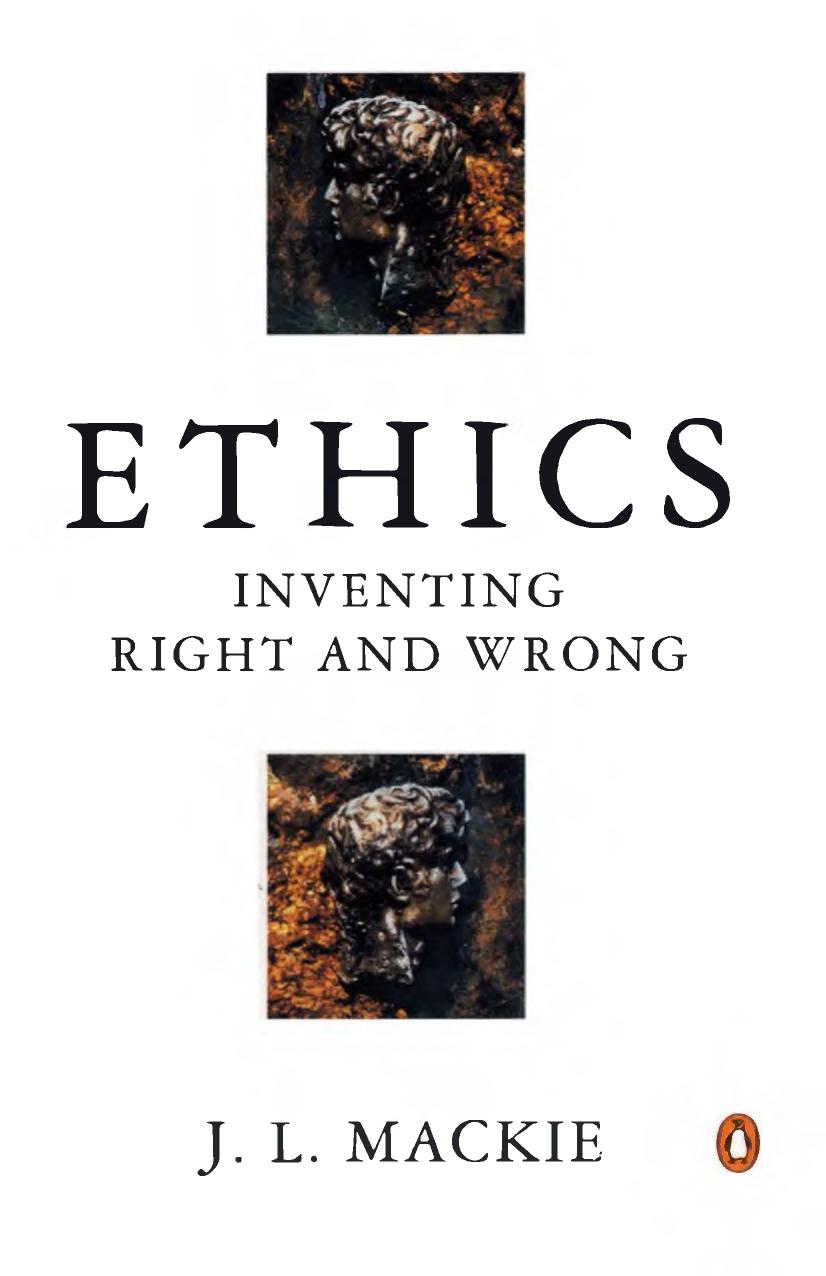
Author:J. L. Mackie
Language: eng
Format: mobi, pdf
ISBN: 9780141960098
Publisher: Penguin Books Ltd
Published: 2009-11-24T16:00:00+00:00
2. The ethics of fantasy
However, even if all the difficulties and indeterminacies mentioned in the last section were resolved, by argument or by decision, there would still be a fatal objection to the resulting act utilitarian system. It would be wholly impracticable. The system can, indeed, be looked at in several different ways, but this charge can be sustained against each interpretation in turn. Suppose, first, that it is considered as a morality in the broad sense, as an all-inclusive theory of conduct. Then, when utility or the general happiness is proposed as the immediate criterion of right action, is it intended that each agent should take the happiness of all as his goal? This, surely, is too much to expect. Mill himself conceded this, and replied to this objection by saying that it confuses the rule of action with the motive of it. The great majority of good actions,’ he said, ‘are intended not for the benefit of the world, but for that of individuals… and the thoughts of the most virtuous man need not… travel beyond the particular persons concerned, except so far as is necessary to assure himself that in benefiting them he is not violating the rights, that is, the legitimate and authorized expectations, of any one else.’ But even if we accept this clarification, and take utilitarianism to be supplying not the motive but only a test of right actions, the charge of impracticality still stands. We cannot require that the actions of people generally should even pass the test of being such as to maximize the happiness of all, whether or not this is their motive. Even within a small village or commune it is too much to expect that the efforts of all members should be wholly directed towards the promoting of the well-being of all. And such total cooperation is out of the question on the scale of a nation state, let alone where the ‘all’ are to be the whole human race, including its future or possible future members, and perhaps all other sentient beings as well. The question, which moral philosophers sometimes discuss, ‘What would happen if there were a society of pure act utilitarians?’ is purely academic. We can indeed work out an answer, though only with difficulty, because this hypothesis is so far removed from anything within our experience that it is difficult to envisage it consistently and thoroughly. But the answer would have no direct bearing on any policies of practical importance. All real societies, and all those which it is of direct practical use to consider, are ones whose members have to a great extent divergent and conflicting purposes. And we must expect that their actions will consist largely of the pursuit of these divergent and conflicting purposes, and consequently will not only not be motivated by a desire for the general happiness but also will commonly fail the proposed test of being such as to maximize the general happiness.
Act utilitarianism is by no means the only moral theory that displays this extreme of impracticality.
Download
Ethics: Inventing Right and Wrong by J. L. Mackie.pdf
This site does not store any files on its server. We only index and link to content provided by other sites. Please contact the content providers to delete copyright contents if any and email us, we'll remove relevant links or contents immediately.
The remains of the day by Kazuo Ishiguro(8947)
Tools of Titans by Timothy Ferriss(8346)
Giovanni's Room by James Baldwin(7301)
The Black Swan by Nassim Nicholas Taleb(7086)
Inner Engineering: A Yogi's Guide to Joy by Sadhguru(6776)
The Way of Zen by Alan W. Watts(6575)
Asking the Right Questions: A Guide to Critical Thinking by M. Neil Browne & Stuart M. Keeley(5740)
The Power of Now: A Guide to Spiritual Enlightenment by Eckhart Tolle(5724)
The Six Wives Of Henry VIII (WOMEN IN HISTORY) by Fraser Antonia(5485)
Astrophysics for People in a Hurry by Neil DeGrasse Tyson(5169)
Housekeeping by Marilynne Robinson(4420)
12 Rules for Life by Jordan B. Peterson(4292)
Double Down (Diary of a Wimpy Kid Book 11) by Jeff Kinney(4252)
The Ethical Slut by Janet W. Hardy(4232)
Skin in the Game by Nassim Nicholas Taleb(4223)
Ikigai by Héctor García & Francesc Miralles(4219)
The Art of Happiness by The Dalai Lama(4115)
Skin in the Game: Hidden Asymmetries in Daily Life by Nassim Nicholas Taleb(3973)
Walking by Henry David Thoreau(3939)
